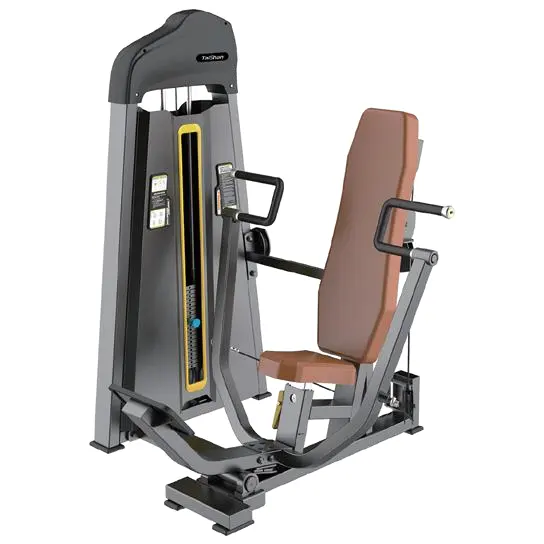
Plate-loaded and selectorized machines can both support a strength-training area, but they create different purchasing and operating requirements. A plate-loaded machine uses separate weight plates, while a selectorized machine usually changes resistance through a pin or another selection mechanism in a built-in stack. This distinction affects more than convenience. It changes what must be stored, how users adjust resistance and which parts need attention. Choose the format around the people using the gym and the movements the machine is intended to provide.
Compare the actual movement
Begin with the machine's exercise path, seat adjustments, start position and range of motion. Two machines assigned to the same muscle group can feel very different because their geometry differs. Ask whether arms move independently and how the manufacturer intends the user to enter and exit. A product photograph cannot establish comfort for every body size. Where possible, arrange a demonstration with the intended users and record their observations separately from the published specifications.
Think about changing resistance
A selectorized stack can make adjustment straightforward when its markings and pin are easy to access. Plate-loaded equipment requires moving plates onto and off the loading sleeves. That process may suit a dedicated strength area with plates close by, but it adds handling during each change. Consider the smallest available increment and the starting resistance of the mechanism. A large maximum capacity is less useful if the minimum setting is unsuitable for some of the people expected to use the machine.
Include plates and storage in the footprint
The frame dimensions of a plate-loaded machine do not include every practical need. Check the space required to approach each loading sleeve, remove plates and return them to storage. Confirm plate-hole compatibility and available sleeve length. Built-in storage pegs can help, but loaded storage must not obstruct moving components or access. A selectorized machine has its own service clearances and may need access around stack covers. Draw the complete working area for either format.
Plan for the user mix
In a shared studio, frequent changes between users may make simple adjustments particularly valuable. In a dedicated lifting area, shared plates and familiar loading procedures may fit the routine. These are workflow considerations rather than universal rules. Ask how easily shorter and taller users can reach the controls and whether exercise instructions are clear. If beginners will use the equipment, plan appropriate orientation and supervision instead of assuming that a fixed movement path makes instruction unnecessary.
Compare ownership costs fairly
Include plates, storage, delivery, assembly, installation and any required anchoring in the price comparison. A built-in stack may reduce the need to buy separate plates, while a plate-loaded machine may share an existing plate collection. Neither advantage is useful unless the components are compatible. Obtain an itemized quotation and compare it with your current inventory. Check which parts are covered under warranty, who supplies replacement components and whether service is available in your location.
Examine wear parts and access
Different designs use combinations of cables, belts, pivots, bearings, bushings and upholstered pads. Ask for the exact maintenance instructions rather than assuming one format is maintenance-free. Check how worn grips and pads are replaced, whether the adjustment mechanism can be inspected and how a technician reaches the moving parts. A clear parts diagram and model identifier can be valuable throughout ownership. Keep those documents with the purchase record so future maintenance does not depend on a generic catalogue photograph.
Build a purchasing comparison
- Target exercise and the machine's adjustment range.
- Minimum resistance, available increments and stated maximum limits.
- Loading or stack-selection process for the intended users.
- Installed footprint including plates, storage and service clearances.
- Complete delivered cost and location-specific support arrangements.
For a mixed facility, a combination of both formats may be sensible when each serves a clear purpose. Prioritize useful movement coverage and user flow before deciding how many machines of either type to buy.
Have something helpful to share? Be the first to join the conversation.